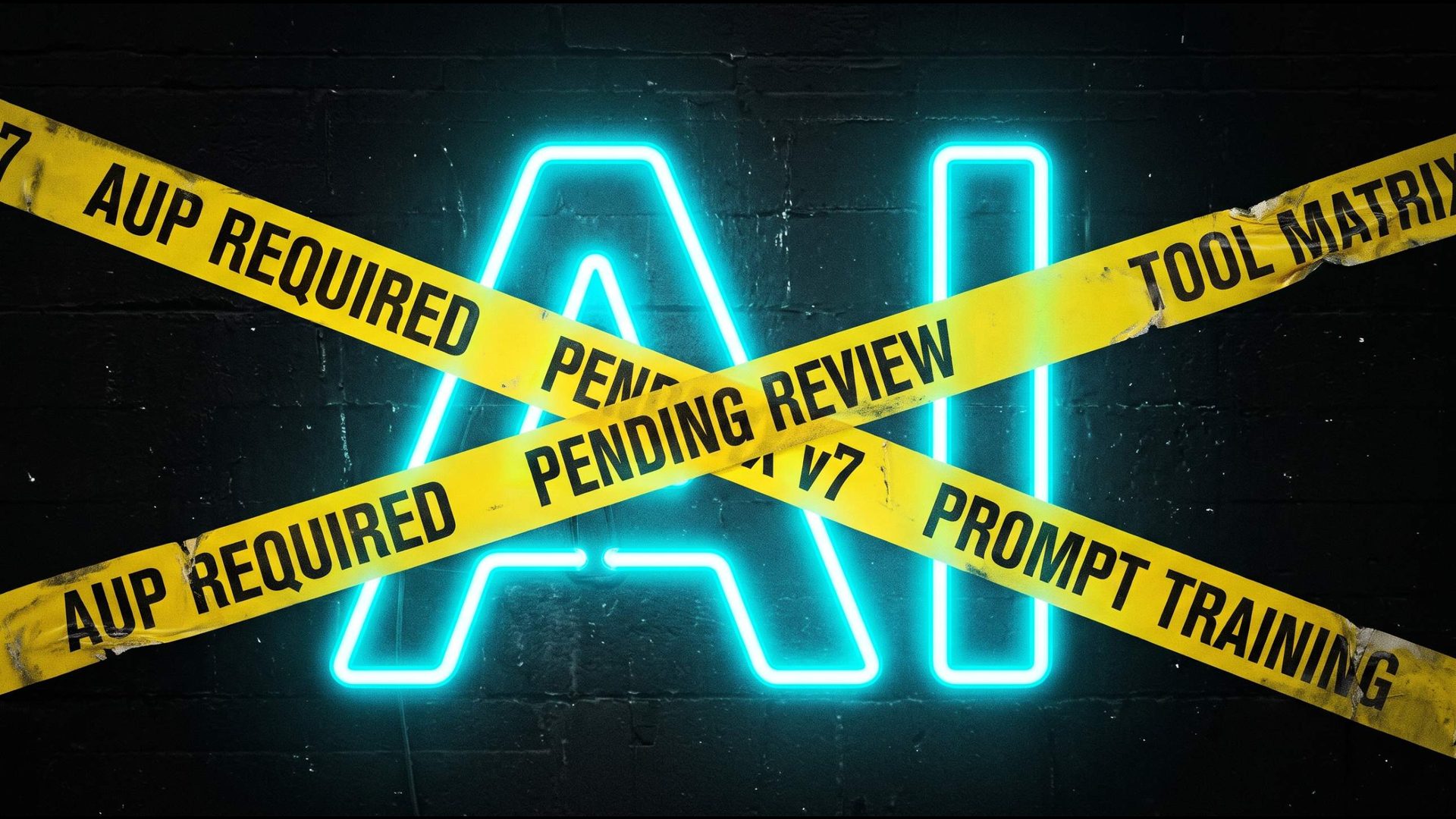
Most MSPs open an AI conversation with a client the same way. Before anyone has seen a single useful thing the technology can do, there is an acceptable use policy. Then a data classification exercise. Then a prompt engineering workshop. Then a tool selection matrix comparing six platforms across forty criteria. Then a roadmap for a "knowledge assistant" bolted onto SharePoint.
By the time we get to the part where AI actually does something, the room has checked out. We took the most exciting technology shift most of our clients will see in their careers and turned it into a project plan.
We are fighting the last war
Three years ago, a lot of the complexity in these roadmaps was earned. The models were brittle. You needed carefully structured prompts to get anything usable. Tool choice mattered because the gap between products was wide. Hallucinations were frequent enough that every output needed a babysitter.
That is not the world we are in anymore. Current models understand plain conversation. You do not need a prompt framework; you need to talk to it like a sharp colleague and tell it what you actually want. The leading tools are all good enough that which one you pick matters far less than whether anyone actually uses it. Yet most of our AI roadmaps still read like it is 2023. The reason most of those roadmaps are garbage is simple: many MSPs have not driven these roads themselves yet. It is hard to guide a client somewhere you have only seen on a map.
This is not a new intranet
The mistake underneath all of it: we keep framing AI as an IT deployment. Something to scope, configure, roll out, and support. Enterprise search with a chat window. A smarter intranet.
That framing is exactly why it lands flat. Nobody has ever been excited about an intranet.
AI is not a system you install for people. It is a different way of working and thinking. The value is not that it finds the document faster. The value is that your client can sit down with a messy problem (a reorg, a pricing decision, a hard conversation with a board member) and work it through with something that pushes back, drafts options, pokes holes, and does the grunt work in minutes. This is not a tool rollout. This is changing how someone shows up at work.
Do you want REAL buy-in?
Sit down with any executive. Put Copilot or Claude on their machine. Honestly, it doesn't matter which, as long as it's a secure, business-licensed version before they drop anything sensitive into it. Skip the slides.
Then spend an hour on their real work:
- Hand it the strategy document they have been avoiding and ask it to tear the thing apart.
- Have it build the analysis they would normally wait a week for someone else to build.
- Talk through the decision that has been keeping them up at night and let it challenge their reasoning.
- Ask it to turn last quarter's mess of notes, emails, and spreadsheets into the board update they dread writing.
No prompt templates. No training curriculum. Just "here is what is on your plate; let's see what happens." The goal is not to teach them a tool. It is to get them to the moment where they lean back and say, "Wait, it can do that?" and then start asking what else they have been doing the hard way.
That moment is the whole game. Adoption, champions, budget, executive sponsorship: all of it follows.
What overcomplicating actually costs
You lose the first impression. People decide how they feel about a technology in the first few minutes. If those minutes are spent on prohibitions, frameworks, and vendor comparisons, AI gets filed under "another IT initiative," not "thing that gives me my Friday afternoon back."
You accelerate shadow AI. Employees are already using personal ChatGPT, Claude, and Gemini accounts on their phones and from their browsers. They see their MSP as the reason they cannot use the cool thing. Then they go use it anyway, without you. The fastest way to get usage into a governed tool is to make the governed tool the exciting one.
You hand the narrative to someone else. If the MSP is the department of complexity, the vendor rep, the YouTube influencer, or the CEO's nephew becomes the AI visionary. That is a strategic seat at the table we are giving away.
But what about security?
Yes, I know: security matters. I have spent most of my career in security and compliance, and I am not arguing for a free-for-all. Securing the data is absolutely part of the deployment plan. But the plan has to deliver something fun and meaningful up front, and if you want a happy client, the low-hanging fruit goes first. The security work runs behind the excitement, not in front of it.
Here is what that looks like in practice.
Phase 1: Low-hanging fruit. A secure, business-licensed tool, a one-page set of ground rules, and nothing connected yet. Get them using AI for day-to-day problem solving: cleaning up marketing copy, drafting emails, working through decisions, summarizing the meeting they missed. Immediate value, minimal risk.
Phase 2: Clean up, then connect. While they absorb Phase 1 and figure out what they want next, you start on the data: permissions cleanup, oversharing, stale shares, sensitivity labels. The phase ends with their AI tool getting direct access to their file stores, safely.
Phase 3 and beyond: Rinse and repeat. Do it again for the ERP. Then the CRM. Then whatever data source is next. Each cycle gives them something new up front and buys you the time to secure the next source before they are ready for it.
The rhythm is the point. Clients need time to absorb each new capability and learn what they actually want from the next one. That learning curve is your runway. While they are embracing what AI can already do, you are getting them ready for the next level of access. By the time they ask for more, your work is done and the data is secure.
Policy fits the same rhythm: write it from how people actually use the tool, and expand it each phase as access expands.
If you support defense contractors under CMMC, healthcare under HIPAA, or anyone holding cardholder data, the guardrails have to be in place before sensitive data is anywhere near an AI tool. Non-negotiable. But that means the guardrails go in first, not the conversation about guardrails. Regulated clients deserve the wow too. They just get it inside a fence you built before they arrived.
Iterate
AI enablement is a game of iteration. We cannot treat it like another Windows Server release, where we wait for the first service pack, plan a migration, and roll it out over eighteen months. This is moving fast, it has momentum, and your competitor is doing everything they can to be the one who helps your client. If you show up with a governance roadmap while they show up with something that works on Monday, you already know who keeps the account.
The MSPs that win the AI era will not be the ones with the best policy templates, the cleverest prompt library, or the most thorough platform comparison. They will be the ones clients associate with the moment AI first changed how they work, and who made it safe without making it boring.
Getting people excited about technology used to be our job. Somewhere along the way we decided our job was to make it complicated. It is time to stop.
Let people have some fun. Then help them keep it safe.
When was the last time you watched a client's face light up over AI? What did you do to get them there?