This week I got verified by both Anthropic and OpenAI for their security access programs. Anthropic actually denied me at first. My situation, an independent consultant doing security work for other people's clients, didn't fit neatly into any of its boxes. Then it re-reviewed the application on its own and approved me for Defense Access. No appeal, no reapplying. New program, a few kinks, about what you'd expect. OpenAI's Daybreak Blue approval landed in my inbox within minutes of applying. When I mentioned it to a few people in the industry, the most common response was "wait, that's a thing?"
It is. Two of the biggest frontier AI labs now run formal verification programs that decide who gets the most capable versions of their models for security work. You apply, they check who you are and what you do, and you get placed in a tier with its own rules.
Most people using these tools every day have no idea this exists. They should, because it's one of the more interesting problems in tech right now. How do you hand out a tool this powerful without handing it to everyone?
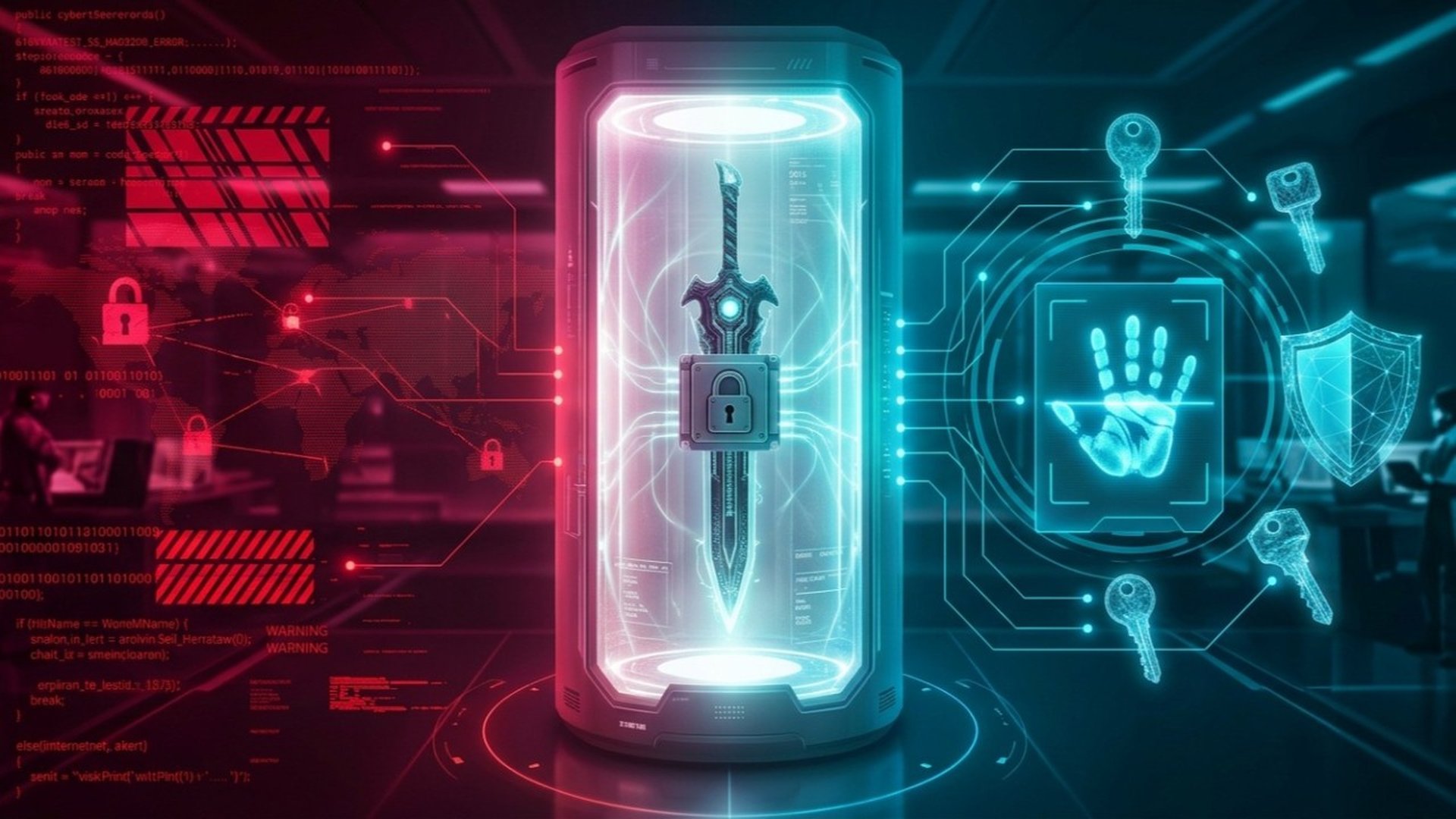
Double-edged sword
Security has always been dual-use. The knowledge that lets you reverse a malware sample is the knowledge that helps you write one. The skill that validates an exploit can weaponize it.
For most of AI's short history, companies handled that with one rule for everybody. The model refused anything that looked offensive, no matter who was asking. That kept some bad actors out. It also meant an incident responder could get stonewalled in the middle of an investigation by a filter that couldn't tell them apart from the attacker.
And the models keep getting better at this. Anthropic says partners in its Project Glasswing program found at least 129,000 verified vulnerabilities in their own systems between April and July using its most capable models. One rule for everybody stops working when the tool is that good. Lock it down and defenders lose it. Open it up and so does everyone else.
Anthropic's answer
Anthropic's Cyber Verification Program got a major rebuild in October. It folded in Project Glasswing, which had given a select group of organizations access to its most capable models, and split access into three tiers.
- Defense Access covers incident investigation, malware analysis, and vulnerability analysis and validation. Organizations and individuals can apply. Individuals need a paid plan.
- Red Team Access adds authorized offensive work like penetration testing. Organizations only, and the review takes weeks.
- Specialized Access is for a small set of organizations authorized to test high-risk systems like power grids and flight systems. Anthropic vets each one in depth with the US government.
The tiers come with security requirements. Defense Access requires phishing-resistant MFA and moving off API keys by December 15, 2026. Anthropic can also narrow or pull a grant.
Anthropic published how much each tier actually lets through. On its test of multi-stage offensive operations, the model under Defense Access safeguards blocked 46 of 50 attempts. The limits aren't just paperwork.
OpenAI's answer
OpenAI started its Trusted Access for Cyber program in February as a pilot and has since rebranded it as Daybreak, with two tiers.
- Daybreak Blue covers defensive work like vulnerability triage, secure code review, malware analysis, detection engineering, incident response and patch validation. Individuals and organizations can apply. Individuals must register at least one physical FIDO2 hardware key. Synced passkeys don't count.
- Daybreak Red covers penetration testing, red teaming, exploit validation and controlled vulnerability research, plus access to cyber-specialized models. Only approved business and enterprise organizations get it.
Both tiers are off by default until an admin turns them on. Both are limited to systems you own or are explicitly authorized to test. And OpenAI is blunt that you can't resell, share, proxy or extend the access to customers.
Side by side
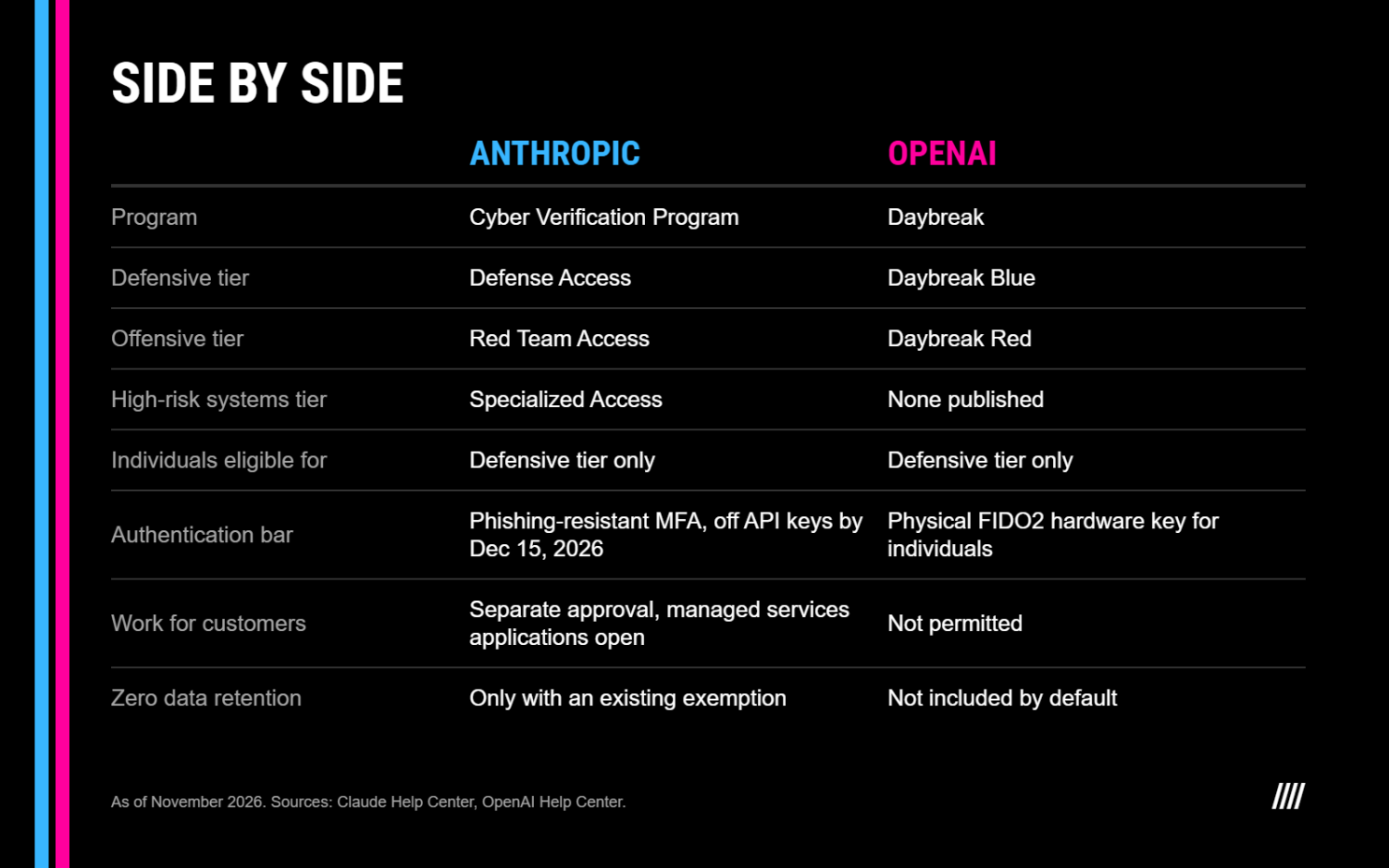
The two labs landed in nearly the same place, which tells you something.
What's still unresolved
This isn't a solved problem. A few things still bother me.
A company decides who counts as a defender. That's a lot of power to sit with a vendor, even a well-intentioned one. Anthropic says organizations that mainly serve military, intelligence or law enforcement customers get a more cautious review. Reasonable people will disagree about where those lines go. I'd rather see the criteria published than hidden, and both labs have published a fair amount. It's still worth watching.
The solo practitioner hits a ceiling. Both programs cap individuals at the defensive tier. The one-person pentest shop or the independent red teamer has to find an organization to work under, or work without. And if your work doesn't fit the categories cleanly, expect some back-and-forth. Mine didn't, at first.
Service providers are an open question. A huge share of security work is done by people working on someone else's systems. OpenAI says no to that outright. Anthropic routes it through a separate approval. Nobody has fully figured out how a verified tool should flow through a third party.
Your data doesn't get special treatment. Neither program includes zero data retention by default. If you work with regulated data, verification doesn't change what you're allowed to paste into a prompt.
Not everyone is doing this. I couldn't find anything comparable from Microsoft. Its public Copilot security program is a bug bounty, which pays researchers to find flaws in Copilot. That's valuable, but it's a different thing.
We are on the right track
With all that said, this is how advanced tools should be handled.
The usual choices are bad ones. Give the capability to everyone and you arm attackers. Give it to no one and defenders fall behind attackers who don't follow anyone's rules. Give it only to big enterprise customers and you leave out the independent researchers and open source maintainers who find a lot of the bugs.
These programs take a fourth path. Verify who you are. Scope what you can do by the work you actually do. Attach security controls to the level of risk. Keep the right to pull access. Leave a door open for individuals, with clean limits on the riskiest capabilities.
None of that is new to security people. It's least privilege, rules of engagement and identity verification, the stuff we've preached for years. What's new is seeing AI companies apply it to their own products, in public, with the tiers written down.
Spider-Man fans figured this out a long time ago. With great power comes great responsibility. The labs have just written the responsibility part into the access terms, and made sure it lands on the people holding the power.
Worth knowing about
If you do security work and you've had an AI model refuse you mid-task, there's probably a program built for you. If you don't, it's still worth knowing that the most capable versions of these tools are already gated by identity, purpose and risk.
The question of who gets the sharp tools isn't going away. Models will keep getting better, and these programs will keep getting tested. For now, two of the biggest labs have put a reasonable answer in writing.
Should AI companies be the ones deciding who counts as a defender? If not them, who?